Pain is your body’s alarm system. It’s meant to protect you—grabbing your attention when something might be wrong. We all know the pain of a paper cut or a broken bone. In those cases, the body sends signals to the brain to help us rest and heal.
But what happens when pain doesn’t go away? Or when it shows up without a clear injury?
Chronic pain simply means pain that lasts longer than expected. Unlike short-term pain, it can feel confusing and exhausting. There’s often no clear timeline for recovery, which can make it hard to stay hopeful or make plans.
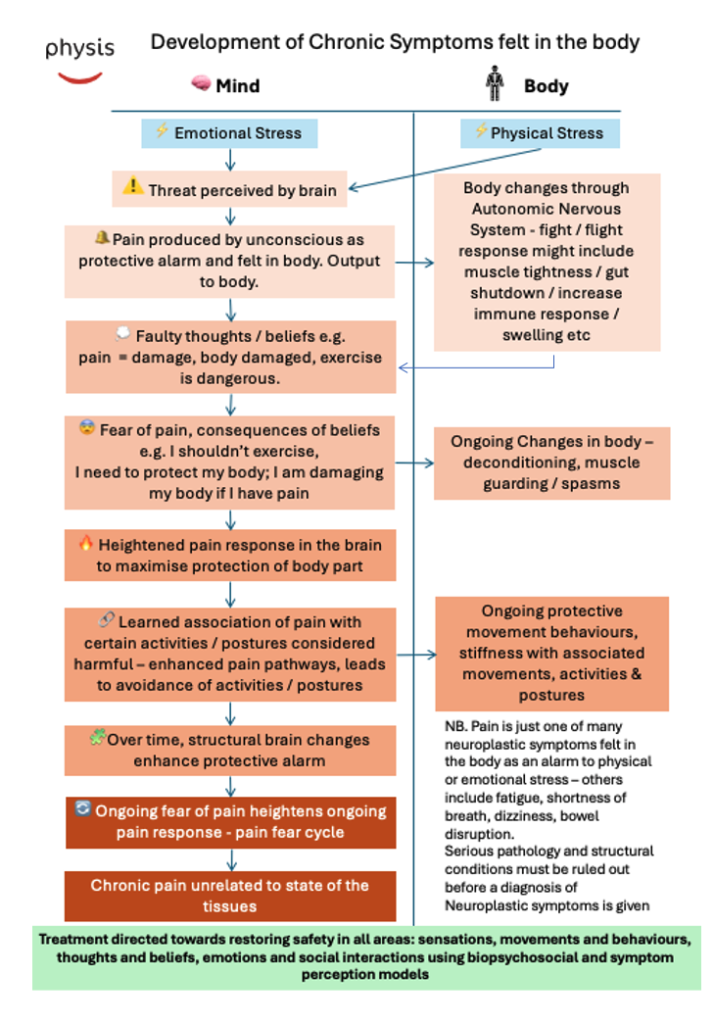
For a long time, treatment focused on managing symptoms, assuming pain always reflected tissue damage. But we now understand that pain is more complex. It’s not just about the body—it’s also about how the brain interprets threat.
Pain is created by the brain. Even after the body has healed, the brain can continue to send pain signals if it still senses danger. This kind of pain is called primary pain, also known as neuroplastic pain or TMS. It’s not caused by ongoing injury, but by changes in the brain and nervous system.
And here’s the hopeful part: primary pain is treatable.
It’s not just pain, either. The brain can also create other sensations—like fatigue, dizziness, numbness, or pins and needles—as part of its alarm system. These symptoms can also be addressed and improved.
Our understanding of pain is evolving. Research shows that the brain can “unlearn” pain through education, movement, and therapies that retrain the nervous system. Many people have recovered from long-term pain once they understood how it works and got the right support.
There’s a growing body of research showing that chronic pain can be treated effectively—especially when we look beyond the physical body and consider the mind-body connection.
It’s estimated that over 40% of conditions seen in GP surgeries are mind-body disorders, yet this approach is rarely discussed. While awareness of mental wellbeing is increasing, it’s still not commonly linked to physical conditions like migraines, low back pain, IBS, or autoimmune disorders.
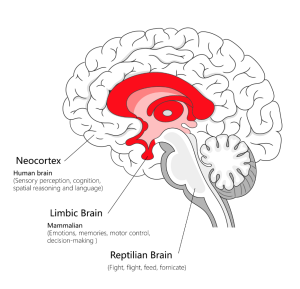
But we know that your thoughts, emotions, and nervous system responses are deeply connected to sensations in your body. Understanding this relationship helps us understand the physical symptoms and how they can arise from emotional stress, past experiences, or patterns of thinking. We can work with your response to the pain including your physical behaviours, your thoughts and your feelings that impact the pain or neuroplastic sensations, as well as help you build awareness of emotions physically felt in the body.
The first step toward healing is understanding the nature of chronic primary symptoms. If you’re curious about resolving your pain or other persistent symptoms, we invite you to explore our resources.
At Physis, we offer specialist coaching to guide you through recovery using a mind-body approach. This kind of support isn’t typically available through the NHS, but it can be life-changing. Some people find relief simply by learning about the root causes of their pain. Others may need more time and professional input—but recovery is possible.
You can choose to work through free resources on your own or partner with us for personalised coaching. The journey isn’t always easy, but it works—and we’re here to help at a level of involvement that suits you needs.
Sometimes, if there are underlying unprocessed memories or there has been significant distress in your past or in your current life, we might ask you to engage in some further psychological help such as counselling or psychotherapy. Our approach is not a substitute for this type of work, but instead focuses on reducing pain related fear and addressing avoidance behaviours, as well as acknowledging the impact of non-pain related threat and its impact of symptoms. We can work with you to provide tools to reduce non-pain related threat, as well as building non pain related safety to help build feelings of safety and confidence in using your body again.
We use evidence-based therapies including:
We’re proud to be affiliated with leading organisations in this field, including PPDA, ATNS, and SIRPA.
As an affiliated clinic to SIRPA you can work with us and go through an online chronic pain recovery programme, or just do this on your own. You can access the SIRPA recovery programme here:
If you are interested in a 1-2-1 consultation for your chronic pain please let us know by emailing us on [email protected] or phoning 0131 478 4646.
These services are available at our Trinity and Westwood Edinburgh Physiotherapy clinics or on-line.
We use cookies to improve your experience on our site. By using our site, you consent to cookies.
Manage your cookie preferences below:
Essential cookies enable basic functions and are necessary for the proper function of the website.
Google reCAPTCHA helps protect websites from spam and abuse by verifying user interactions through challenges.
Statistics cookies collect information anonymously. This information helps us understand how visitors use our website.
Google Analytics is a powerful tool that tracks and analyzes website traffic for informed marketing decisions.
Service URL: policies.google.com (opens in a new window)
You can find more information in our Privacy Policy and .