
Active Cycle of Breathing Technique (ACBT)
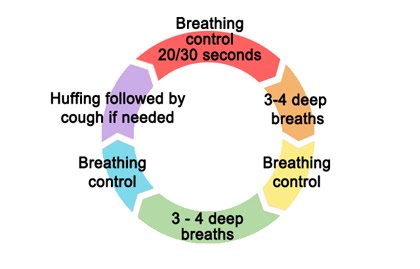
The Active Cycle of Breathing Technique (ACBT) is a simple, structured way of using deep and relaxed breathing to help move phlegm (mucus) from the small airways at the bottom of the lungs to the larger airways near the top. Once the phlegm has moved, it becomes much easier to clear using huffing or coughing.
Before starting, your body position is important. Sitting upright or lying comfortably with your chest open allows for better airflow. If needed, you may be asked to cough phlegm into a pot so it can be checked later.
ACBT can be adapted to suit your condition. A respiratory physiotherapist at Physis Physiotherapy can guide you on the version that’s best for you. Below is a basic outline of the technique.
The Four Stages of ACBT
ACBT includes four stages. The number of breaths or huffs you perform can vary depending on how you feel.
- Breathing Control (Relaxed Breathing)
This stage helps you relax and settle into the technique.
- Place your hands gently on your tummy.
- Breathe in and out softly, feeling your tummy rise as you breathe in and fall as you breathe out.
- Keep your breaths slow and gentle—imagine letting the air go without effort.
- Thoracic Expansion (Deep Breathing)
These deeper breaths help open the lungs fully and loosen phlegm in the lower airways.
- Breathe in slowly through your nose.
- Feel your stomach rise first, then your chest.
- When your lungs feel full, pause briefly for 2–3 seconds.
- Breathe out gently through your mouth.
Repeat this several times, staying relaxed throughout.
- Forced Expiration Technique (Huffing)
Huffing helps move loosened phlegm up toward your throat.
- Take a normal, relaxed breath in.
- Huff the air out strongly—as if trying to steam up a mirror.
- This should be a long, firm breath out, without closing your throat.
- A huff may trigger coughing. Try to hold the cough until you feel the phlegm reach the top of your throat.
- If nothing moves, return to breathing control and repeat the cycle.
- Coughing
A cough should only be used when the phlegm is ready to be cleared.
- Cough once or twice to bring the phlegm up.
- Avoid repeated coughing, which can be tiring.
- If you’ve recently had surgery, you can support the wound with your hands or a folded towel to reduce discomfort.
Benefits of ACBT
ACBT is effective for many people because:
- It helps remove phlegm and reduces the risk of chest infections.
- It can be done in bed or sitting in a chair, even while watching TV.
- Deep‑breathing stages help improve lung volume and long‑term lung function.
- No equipment is required.
- It can be easily adapted for a wide range of conditions and abilities.
Who Can Benefit from ACBT?
ACBT is useful for anyone who needs help clearing phlegm from their lungs, including:
- After surgery, when anaesthetic and reduced mobility can increase infection risk
- People with chronic lung conditions who want to prevent infections or manage symptoms
- People with acute chest infections or temporary breathing difficulties
Here is a video on how to do active cycle breathing. Click on this link for more information.
Find out more about our Respiratory physiotherapy.
If you have any questions or queries, please get in touch.
If you think you would benefit from some treatment to improve your breathing, give us a call on 0131 478 4646, or book on-line.